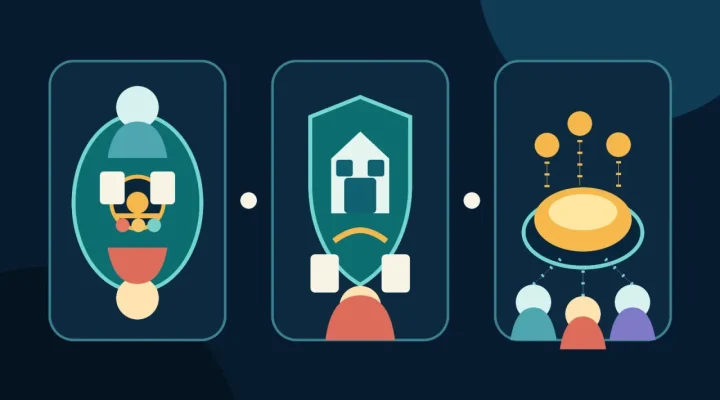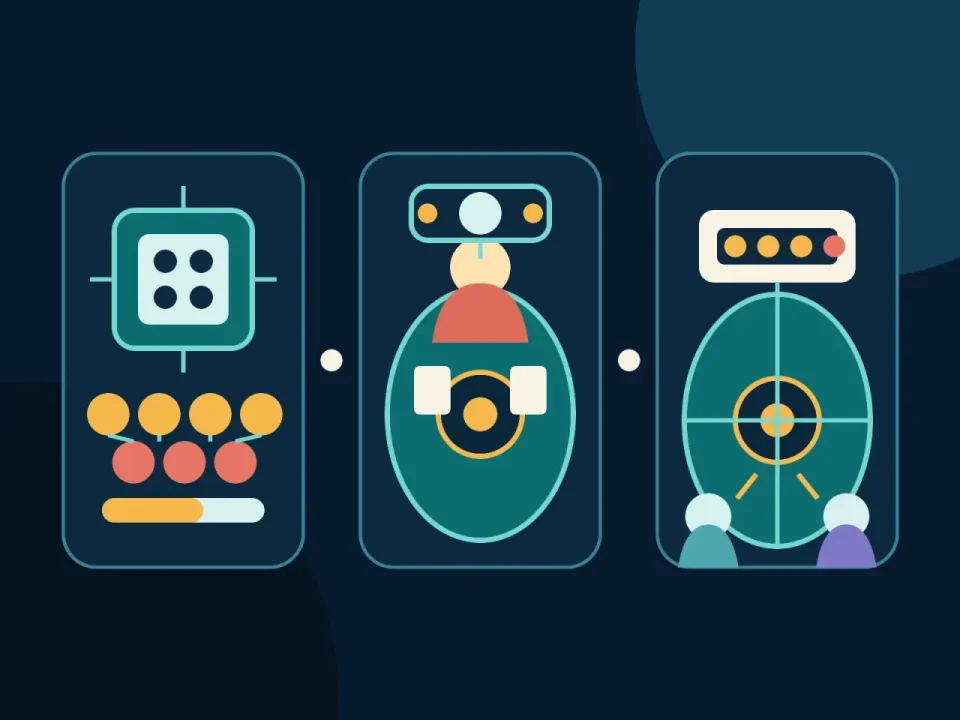
RNG, live and hybrid games can look similar on screen, but they create and record outcomes in different ways. This guide explains each route and what players should verify before staking money.
The distinction adds another layer to FairDealer’s map of game families and mechanics. It is also separate from the counterparty and prize-funding model. A house-banked roulette game, for example, can use software, a physical wheel or more than one mechanism without changing who settles the wager.
The outcome has a route
A result is not simply the picture that appears at the end of a round. It begins with an event that supplies randomness, passes through rules that translate that event into cards, symbols or numbers, and ends with settlement under a paytable. The screen may animate every stage, only the final stage or a decorative version of the process.
That route is the useful thing to identify. In an RNG game, software or hardware produces random numbers and the game maps them to outcomes. In a live game, a physical device or dealer action produces the core event and a system records it for online settlement. A hybrid product uses more than one source or layer in the same round. The label on a lobby tile may not explain which layer controls which part of the payout.
RNG is an outcome engine
A random number generator produces numbers intended to have statistical randomness. The raw number is not usually the symbol a player sees. It can be scaled into the range required by the game and then mapped to a card, reel position, ball or other result. The Spanish technical rules give the simple example of converting output into one of 52 card values or a defined set of bingo numbers.
The UK Gambling Commission’s RNG standard requires game results to be demonstrably random, with output that is unpredictable and distributed according to the game’s theoretical probabilities. It also says that scaling must preserve those qualities. Testing therefore concerns the complete route from generated values to game outcomes, not the speed or drama of the animation.
Random does not mean that every displayed prize must be equally likely. A game can map many possible random values to a common outcome and far fewer values to a rare one. The relevant rules and probability information describe that distribution. Nor does randomness mean that a previous loss makes the next round due to win. An independently generated result does not remember a player’s recent sequence.
The visible spin, card turn or reel stop may be a presentation of a result already determined by the game engine. That does not make the result less random if the underlying system works as declared and has been tested. It does mean the animation should not be mistaken for a physical cause that a player can time or read.
Live uses a physical event
A live game uses real equipment or a real dealer action as part of producing the core result, with an online system carrying bets and the result to remote players. Cards are dealt, a wheel is spun or another physical procedure takes place in a studio or casino setting. A camera lets the player follow the round, but the camera itself does not create the outcome.
The UK live-dealer standard focuses on auditable operations. It calls for suitable equipment, trained dealers, documented procedures, supervision, surveillance and game logs. Those controls address risks that differ from software RNG testing, such as biased physical equipment, an incorrect dealing procedure or a mismatch between the table event and the recorded result.
Recognition can be automatic. Sensors or image systems may read the roulette pocket or card, and platform software then settles online bets. A correction does not mean a fresh random event occurred. It can mean that the system initially recorded the physical event incorrectly. Current Spanish rules require manual correction mode to be disclosed while active and leave a trace for later review.
Streaming delays do not normally let the player act after the outcome is known because betting closes before the decisive event under the game rules. If video, voice or data is interrupted, the operator’s published procedure should explain whether a round waits, completes or is cancelled. The fair treatment of an interrupted round is part of the game, not an improvised decision based on whether the player won.
Hybrid separates the layers
Hybrid is a useful descriptive word, but it is not one universal game method. It can describe a round where a physical event sets the base result while an RNG selects an added feature, modifier or bonus. It can also describe a product that combines a live stage with software-driven stages. The rules must identify which mechanism controls each stage.
A current example is Evolution’s Lightning Roulette mechanics page. The ball settles in a numbered pocket on an automatic physical wheel. Separately, the system generates Lucky Numbers and random payout modifiers. A straight-up wager receives the modifier only when the physical winning number is also one of the RNG-selected numbers. The final settlement therefore depends on two distinct inputs.
This example shows why the word hybrid is not enough on its own. The wheel does not choose the modifiers, and the RNG does not choose where the ball lands. A player needs the interaction rule between the two. Another hybrid game may assign its stages differently, so the mechanism cannot be inferred from the theme or copied from a similar title.
A live-looking screen is not proof of a live result. Recorded presenters, animated hosts and realistic tables can accompany an RNG product. Conversely, a genuine live table still relies on software to accept bets, close the market, capture the physical result and calculate payouts. Presentation, outcome source and settlement system should be read as separate layers.
Fairness is tested differently
For RNG games, testing looks for statistical behavior, unpredictability, correct seeding and faithful mapping to the advertised probabilities. For live games, assurance looks at physical equipment, procedures, staff controls, surveillance and the record connecting the table event to settlement. A hybrid game needs both kinds of control where each mechanism is used, plus integration testing for the rule that joins them.
That difference does not establish that one category is more favorable to the player. Return and probability come from the actual rules and paytable. A live wheel is not automatically more generous than a simulated one, and a software result is not automatically more predictable than a physical result. Certification supports integrity; it does not promise a particular player a return.
Read the rule that resolves the wager
Before playing, identify the event that decides the base result and any separate event that changes a payout or unlocks a feature. Check when betting closes, how the platform records the event, what happens if recognition is corrected and how an interrupted round is treated. In a hybrid game, read the rule linking the physical and software-generated parts.
The history panel can help confirm what the platform recorded, but it cannot turn earlier independent outcomes into a forecast. Likewise, a dealer’s pace, a reel animation or a dramatic modifier reveal does not change the stated probability simply because it feels more observable. The practical value of understanding the route is better verification, not a method for predicting the next result.