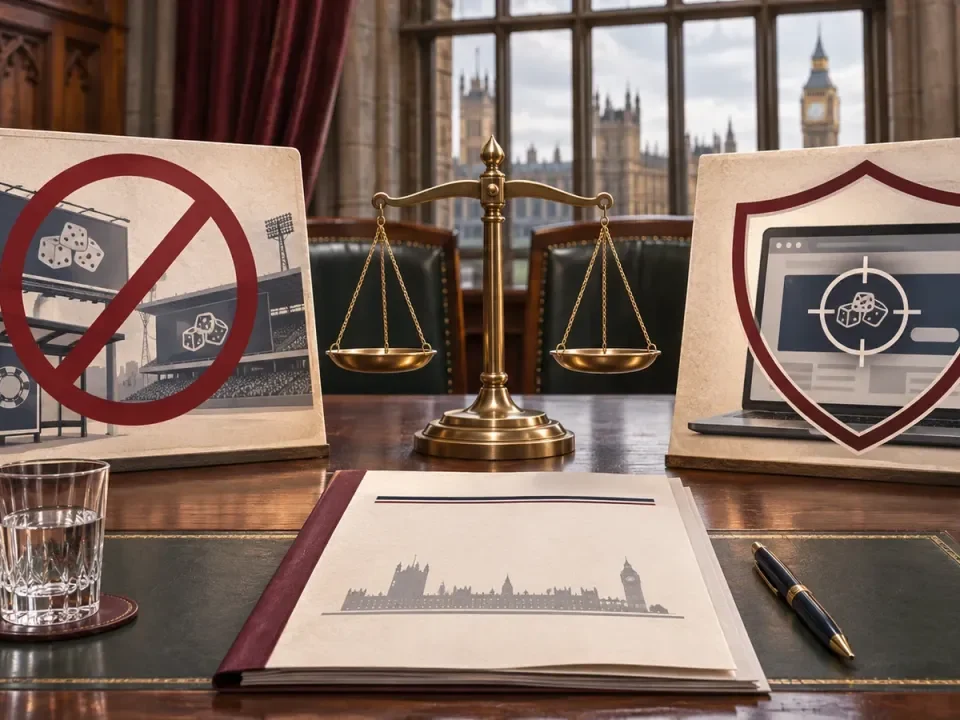
The UK government has rejected a House of Lords committee's recommendation for a comprehensive ban on gambling advertising and sponsorship. Ministers instead defended the existing advertising regulator while accepting that a legal gap limits their powers over online gambling promotion.
The decision appears in the government response published by the Lords Liaison Committee on November 19. It says licensed operators should be able to advertise responsibly and argues that a broad ban would not specifically target young people or others most vulnerable to gambling harm.
Ministers also said a blanket restriction could make it harder for consumers to distinguish licensed businesses from illegal operators and could affect sports and other sectors supported by advertising. The response does not remove existing advertising rules or prevent more targeted restrictions.
The government retained the Advertising Standards Authority as the main specialist regulator rather than accepting the committee's proposal for a single statutory gambling-advertising body. SBC News reported that ministers also rejected wider sponsorship bans below the Premier League, additional restrictions on training-kit sponsorship and a licensing regime for affiliates.
A narrower change remains on the table. iGaming Business reported that the government agreed to seek primary legislation correcting section 333(6) of the Gambling Act 2005, which currently limits the secretary of state's section 328 powers over online gambling advertising. No bill or timetable has been announced.
The response also directs attention toward unlicensed promotion. The Illegal Gambling Taskforce will examine influencer content, advertising-supply-chain checks and promotions for sites outside the GAMSTOP self-exclusion system. The government remains open to tighter controls on cross-selling and the marketing of higher-risk products after evaluation of existing reforms.
G3 Newswire independently reported the rejection and the government's stated preference for proportionate regulation. The outcome is a policy decision against a universal ban, not a relaxation of current age, licensing or content standards.