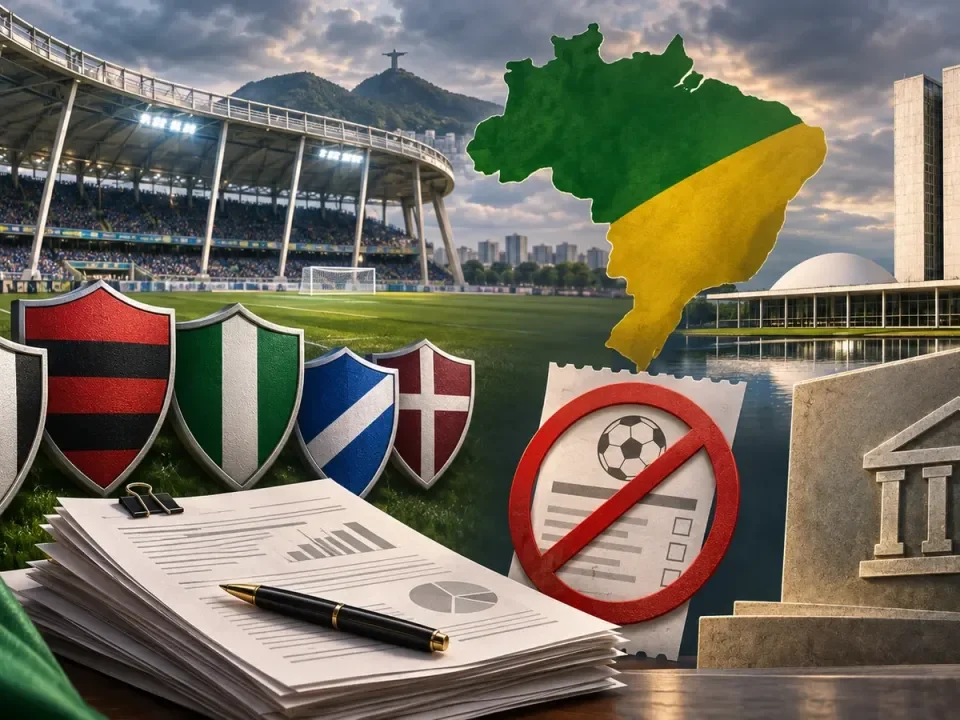
Around 35 clubs from the top two divisions of Brazilian football have signed a commitment letter seeking discussions with the federal government about access to financing. Club leaders say the abrupt loss of betting sponsorship income has intensified existing debt and cash-flow pressures, but the proposal has not yet become a government programme.
The meeting and letter were reported by ge.globo on November 17. Internacional president Alessandro Barcellos said the clubs want to open a structured discussion rather than receive a direct grant. Corinthians president Osmar Stábile said possible financing could involve federal institutions such as BNDES or Caixa, although no lender or public authority has approved such an arrangement.
The initiative follows Brazil's federal measure prohibiting fixed-odds betting and online gaming. The government announcement says the measure covers the operation, offer, intermediation and advertising of betting. Football clubs had become major recipients of sector sponsorship and are now reassessing contracts, budgets and competition revenue.
According to the iGaming Brazil report, Stábile estimated that Corinthians failed to complete nearly BRL500 million in betting-company contracts. That figure is his assessment of foregone business rather than an audited loss for the group of clubs. Barcellos described the proposal as access to credit that other economic sectors have used during disruption.
The letter does not have unanimous support. Palmeiras president Leila Pereira declined to sign and argued that poor management, rather than the betting ban alone, explains much of the financial crisis. She also questioned how borrowed public money would be used and warned against adding debt without clearer controls. Her objection makes the proposal a live policy debate rather than a settled position across Brazilian football.
The financing request is related to, but distinct from, the Brazilian Football Confederation's own revenue projections. FairDealer previously reported the CBF forecast of a BRL420 million impact in 2027. The new event is the clubs' joint letter and effort to open talks with the government.
No loan terms, eligibility rules or repayment structure have been announced. The clubs still need to turn the letter into a concrete proposal and persuade the federal government and any prospective lender. Until then, the initiative signals organized pressure from football executives but does not guarantee public financing or compensation for lost sponsorships.